
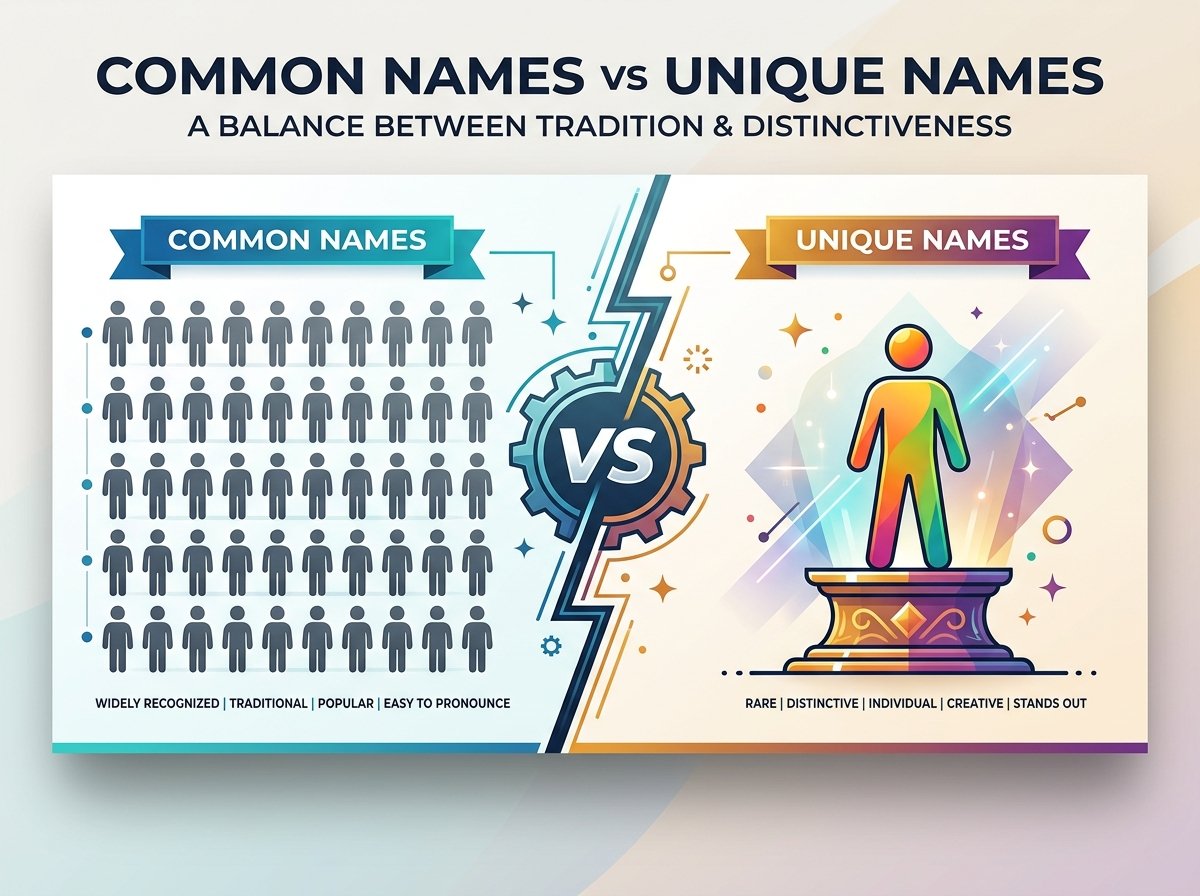
There are roughly 4.3 million babies born every year in the United States alone. And guess what? A huge chunk of them end up sharing their name with thousands — sometimes millions — of other people. Meanwhile, some parents go the opposite route and pick names so rare that even Google can’t find another person with the same one.
So here’s the big question: should you go with a familiar, time-tested common name or pick something unique that stands out?
This isn’t just a parenting debate. It affects adults too — people who’ve lived with a common name their whole life and wished for something different, or those with a unique name who spent every first day of school spelling it out loud.
The truth? Both sides have real advantages and real drawbacks. And the “right” choice depends on what matters most to you. Let’s break it all down — the psychology, the data, the social impact, and the practical stuff nobody talks about.
What Exactly Makes a Name “Common” or “Unique”?
Before we compare anything, let’s get clear on definitions. Because “common” and “unique” mean different things to different people.
Common Names — The Familiar Ones
A common name is one that appears frequently in a population. Think James, John, Mary, Jennifer, Muhammad, or Emily. According to U.S. Social Security Administration (SSA) data, the name “James” has been given to over 4.7 million boys since 1880. That’s a staggering number.
Common names typically:
- Appear in the SSA’s top 100 list for multiple decades
- Are easily recognized and spelled by most people
- Have cultural or historical roots that are well-known
- Show up across multiple countries and languages
If you’re curious about what makes a name rare or common, the answer often comes down to usage frequency, cultural trends, and regional popularity.
Unique Names — The Standout Ones
A unique name is one shared by very few people. Some are invented entirely. Others are borrowed from uncommon languages, nature, mythology, or creative spelling. Names like Zephyr, Elowen, Kaius, or Thessaly fall into this category.
Unique names typically:
- Don’t appear in the SSA’s top 1000 list
- Might be the only one in an entire school or workplace
- Often have unusual spellings or pronunciations
- Sometimes carry deep personal meaning from the parents
Some names are so rare that only a handful of people in the entire world share them.
Quick Fact: The SSA considers a name “unique” if fewer than 5 babies in a given year received it. Names below that threshold don’t even make it into public records.
The Pros and Cons of Common Names
Let’s be honest — common names get a bad reputation sometimes. People call them “boring” or “basic.” But there’s a reason these names have lasted for generations.
Why Common Names Work Well
1. Instant Recognition
Nobody struggles to pronounce “Sarah” or “David.” Your name doesn’t become a conversation starter for the wrong reasons. You walk into a meeting, hand over your resume, or introduce yourself — and everything flows smoothly.
2. Professional Advantage
Here’s something that might surprise you: multiple studies suggest that people with easier-to-pronounce names tend to be perceived more favorably in professional settings. A 2012 study published in the Journal of Experimental Social Psychology found that name fluency — how easily a name rolls off the tongue — actually influences trust and likability.
If you’ve ever wondered whether your name can affect your career, the research says yes, it can — at least at the first-impression stage.
3. Cultural Belonging
Common names often connect you to a larger community. A name like “Muhammad” carries religious significance across the Muslim world. “Maria” resonates across dozens of cultures. These names create an instant sense of shared identity.
4. Easy for Systems and Paperwork
This sounds trivial, but it matters more than you’d think. Common names rarely get flagged by spell-checkers, automated systems, or government forms. No one misspells “Michael” on your passport.
The Downsides of Common Names
1. Identity Blending
If your name is “Jessica Smith,” there are literally thousands of other Jessica Smiths out there. You can check how many people share your full name — and the number might shock you.
This creates real-world problems: confused medical records, mixed-up background checks, and a social media presence that’s almost impossible to build under your own name.
2. The “Another One?” Reaction
By 2025, names like Liam and Olivia have topped the charts for so many consecutive years that teachers, nurses, and daycare workers openly joke about having five of them in every group. That “oh, another Liam” reaction can feel deflating.
3. Generational Dating
Common names often stamp a decade onto you. Hear “Karen” and most people think Gen X. Hear “Brittany” and you’re instantly placed in the mid-1990s. These most popular names by decade tell a very clear story about when you were born.
Pro Tip: If you love a common name but want to reduce overlap, consider pairing it with a more distinctive middle name. “James Orion” or “Emily Soleil” gives the best of both worlds.
The Pros and Cons of Unique Names
Unique names are having a moment right now. More parents than ever are choosing names that stand out. But is “different” always better?
Why Unique Names Work Well
1. Memorable First Impressions
You meet someone named “Zephyrine” at a networking event. You’re going to remember her. Unique names stick in people’s minds, which can be a genuine social and professional advantage.
2. Strong Personal Identity
A unique name can give someone a powerful sense of individuality from day one. Studies in psychology suggest that people with distinctive names often develop a stronger sense of self — they’re used to standing out, and many embrace it.
The psychology behind unique names shows that name distinctiveness can shape personality traits like confidence, creativity, and resilience.
3. Digital Advantage
This is a huge one that older generations didn’t have to think about. If your name is “Kai Vossler,” you can probably claim that exact username on every platform. You’ll own page one of Google for your name. Your personal brand is yours from birth.
Compare that to someone named “John Williams,” who’s competing with millions of search results — including a world-famous film composer.
4. Cultural Storytelling
Many unique names carry rich stories. Parents draw from ancestral languages, mythology, nature, or deeply personal experiences. The name becomes a conversation piece with genuine meaning behind it.
The Downsides of Unique Names
1. The Constant Correction
People with unique names spend a lot of time correcting pronunciation and spelling. Every phone call. Every Starbucks order. Every substitute teacher. It’s a small thing each time, but it adds up over a lifetime.
2. Social Judgment — It’s Real
Let’s not sugarcoat this. People judge unusual names. A 2009 study from Shippensburg University found that teachers sometimes form expectations about students based on their names alone. Names perceived as “too unusual” occasionally triggered lower expectations — an unfair bias, but a documented one.
3. Professional Bias
While unique names can be memorable, they can also face discrimination in hiring. Research on resume callbacks has shown that names unfamiliar to recruiters sometimes receive fewer interview invitations. This bias is especially pronounced when the name signals a specific ethnic or cultural background.
4. The Teasing Factor
Kids can be brutal. A name that’s beautiful on paper might become playground ammunition. Parents who pick creative names should think about how the name sounds when shouted across a schoolyard — and what rhymes with it.
Did You Know? In some countries like Denmark, Germany, and Iceland, governments maintain approved name lists. Parents can’t just pick any name they want. The goal is to protect children from names that might cause them social difficulty.
What the Data Actually Tells Us
Numbers don’t lie. And the data on naming trends tells a fascinating story about where we’re heading.
The Shift Toward Uniqueness
The SSA reports that the top 10 baby names now account for a much smaller percentage of total births compared to the 1950s. Back then, about 30% of all boys were named one of the top 10 names. By 2024, that number dropped below 8%.
That means naming diversity is exploding. Parents are spreading out across thousands of options rather than clustering around a few favorites. You can explore how name popularity changes over time — the patterns are genuinely surprising.
Social Media’s Role
Platforms like Instagram, TikTok, and Pinterest have become unexpected forces in baby naming. A single viral post can push an obscure name into the spotlight overnight. This is how names like “Wren,” “Saylor,” and “Oakley” shot up the charts in recent years.
The influence of social media on baby names is now a documented phenomenon — and it’s accelerating.
Celebrity Influence
When Kylie Jenner named her daughter “Stormi” or when Elon Musk chose “X Æ A-12” for his son, the internet exploded. Celebrity baby names generate massive search volume and often trigger naming trends — though not always in the direction you’d expect. Sometimes a celebrity name becomes popular. Other times, it becomes a cautionary tale.
Check out which celebrity names became trending and how long that trend actually lasted.
How Names Affect Real Life — Beyond the Playground
This isn’t just about preference. Your name follows you into job interviews, courtrooms, classrooms, and relationships. Here’s what research and real-world experience tell us.
The Resume Test
A landmark study by economists Marianne Bertrand and Sendhil Mullainathan sent identical resumes with different names to employers. Resumes with “white-sounding” common names received 50% more callbacks than those with distinctly African-American names. The study didn’t test “unique vs common” directly, but it revealed something important: name familiarity affects how people treat you.
This doesn’t mean you should avoid unique names. It means the world still has biases — and awareness of those biases helps you make informed choices.
The Classroom Experience
Teachers form first impressions before they even meet students. A 2019 study found that teachers shown a class roster predicted student behavior partly based on names. Common names associated with “well-behaved” students from previous years created positive expectations. Unusual names sometimes triggered curiosity — or caution.
Does a rare name actually affect personality? Research suggests names don’t determine personality, but they can influence how others interact with you — which, over time, shapes your social experience.
The “CEO Name” Myth
There’s a popular idea that CEOs tend to have short, common names. And there’s some truth to it — analysis of Fortune 500 leaders shows a heavy concentration of names like John, James, Robert, and William. But correlation isn’t causation. These men were born in the 1950s and 1960s, when those names dominated. The pattern reflects generational naming trends, not a magic formula for success.
Some people genuinely believe that certain names sound rich or successful. The perception is real, even if the connection is mostly psychological.
What Parents Are Actually Choosing Right Now
The naming landscape in 2025 looks very different from even a decade ago. Here’s what’s happening:
The “Goldilocks Zone”
Smart parents are finding a middle ground. They pick names that are distinctive but not bizarre. Names like Elara, Theo, Juniper, Cassian, or Wren — recognizable enough to feel like real names, rare enough to stand out.
This approach avoids the pitfalls of both extremes. Your child won’t be one of five Olivias in their class, but they also won’t spend every day spelling their name for confused strangers.
Old Names Making a Comeback
Here’s an unexpected trend: names from the early 1900s are cycling back. Hazel, Theodore, Eleanor, Arthur, and Maeve all felt outdated 20 years ago. Now they’re trendy picks for Gen Alpha babies. These old-fashioned names making a comeback offer a sweet spot — they feel fresh because nobody under 80 has them, but they’re easy to spell and pronounce.
Gender-Neutral Names Rising
Names like Avery, Riley, Jordan, Sage, and Rowan are being chosen regardless of gender. This trend reflects broader cultural shifts toward flexibility and inclusivity.
Regional Differences Matter
A name that’s “common” in Texas might be “unique” in Vermont. Geography plays a bigger role than most parents realize. The name Santiago, for example, ranks much higher in states with large Hispanic populations. Understanding how name trends spread across states can help you judge whether your choice is really as unique — or as common — as you think.
Myths That Need to Die
Myth 1: “Unique Names Mean Your Child Will Be More Creative”
There’s no evidence that a creative name makes a creative person. Plenty of groundbreaking artists, scientists, and entrepreneurs have had perfectly ordinary names. Albert Einstein. Steve Jobs. Marie Curie. The name doesn’t make the person.
Myth 2: “Common Names Are Lazy Choices”
Choosing “Elizabeth” doesn’t mean you didn’t think about it. Some parents choose classic names deliberately — because of family tradition, cultural significance, or simply because they love the sound. A name’s popularity doesn’t reduce its meaning.
Myth 3: “A Unique Name Will Make My Child Stand Out in College Admissions”
Admissions committees care about your transcript, essays, and activities. Nobody got into Harvard because their name was Zylandria. If anything, an excessively unusual name might distract from substance.
Myth 4: “Unique Spelling Makes a Common Name Unique”
Spelling “Ashleigh” instead of “Ashley” or “Jaxon” instead of “Jackson” doesn’t create a unique name. It creates the same name with a different spelling — and a lifetime of corrections. Most naming experts agree: if you want unique, choose a genuinely different name rather than a creative misspelling.
A Practical Framework for Deciding
If you’re actively trying to pick a name — for a baby, a pen name, or even a legal name change — here’s a simple checklist:
The 5-Point Name Test
- The Starbucks Test: Can a barista spell it after hearing it once?
- The Playground Test: Will kids easily make fun of it?
- The Resume Test: Does it look professional on a job application?
- The Google Test: What comes up when you search this name?
- The 80-Year Test: Will this name age well from a baby to a grandparent?
Pro Tip: Say the full name out loud — first, middle, and last — multiple times. Listen to how it flows. Check the initials. Make sure they don’t spell something unfortunate.
Questions to Ask Yourself
- Do I care more about my child fitting in or standing out?
- Am I choosing this name for me or for my child?
- How will this name work in different settings — school, work, internationally?
- Does this name honor my culture or family in a meaningful way?
- Would I want this name for myself?
If you want to understand why parents choose rare names today, the reasons are deeply personal — from wanting to honor heritage to simply loving how a name sounds.
The Best of Both Worlds — Is It Possible?
Absolutely. And many parents are doing exactly this in 2025.
Strategy 1: Common First Name + Unique Middle Name
Give your child a safe, professional first name and a creative, meaningful middle name. “James Peregrine” or “Sophia Isolde” — classic up front, distinctive underneath.
Strategy 2: Unique First Name + Common Last Name
If your surname is Johnson or Smith, a distinctive first name helps with identity and search visibility without creating pronunciation nightmares. The common last name grounds it.
Strategy 3: Pick From the “Sweet Spot” Zone
Names ranked #200 to #500 on the SSA list are often ideal. They’re real, recognizable names — but rare enough that your child probably won’t share one with a classmate. Names like Thea, Callum, Seren, Ezra, or Sienna live in this sweet spot.
Strategy 4: Use Familiar Names From Other Cultures
A name like “Idris” or “Leonie” might be common in one country but unique in another. This gives you cultural richness, easy pronunciation, and relative rarity — all at once.
FAQ Section
Is it better to give a child a common name or a unique name?
There’s no single “better” choice — it depends on your priorities. Common names offer ease, recognition, and professional smoothness. Unique names provide individuality, memorability, and digital-age advantages. The ideal approach for many families is finding a name that’s distinctive but not difficult — easy to say and spell, yet not shared by thousands.
Do unique names hurt children socially?
Research shows mixed results. Extremely unusual names can sometimes attract teasing or bias, especially in early school years. But moderately unique names often become a source of pride and identity as children grow older. The key factor isn’t uniqueness itself — it’s whether the name is pronounceable, pleasant-sounding, and age-appropriate.
What’s the most popular baby name in the U.S. right now?
As of the most recent SSA data (2024 report), Liam continues to dominate for boys, while Olivia holds strong for girls. These names have topped the charts for several consecutive years. You can explore the most popular names according to SSA data for the full rankings and historical comparisons.
Can I check if my name is truly unique?
Yes. Several tools and databases let you search your name’s frequency. The SSA database covers U.S. births, while other international databases offer global perspectives. You can check if your name is truly unique using name frequency calculators that estimate how many people share your exact name.
Why do name trends change so fast now?
The internet accelerated everything. A name used in a popular Netflix show can spike in searches within 24 hours. Social media, celebrity culture, and global connectivity mean naming trends now move at digital speed — much faster than the slow, generational shifts of previous eras.
Your Name, Your Story
Here’s what it really comes down to: a name is a gift and a label, a source of pride and sometimes frustration, a first impression and a lasting identifier. Whether it’s shared by millions or belongs to you alone, what matters most is the life you build around it.
Common names carry history, reliability, and connection. Unique names carry individuality, creativity, and bold intention. Neither choice is wrong — and the “perfect” name is simply the one chosen with love, thought, and just enough practicality.
If you’re still deciding, try this: find out how many people already have the name you’re considering. That single number might be the clarity you need. Whether it shows 2 million or just 2 — you’ll know how you feel about it. And that gut reaction? Trust it.