
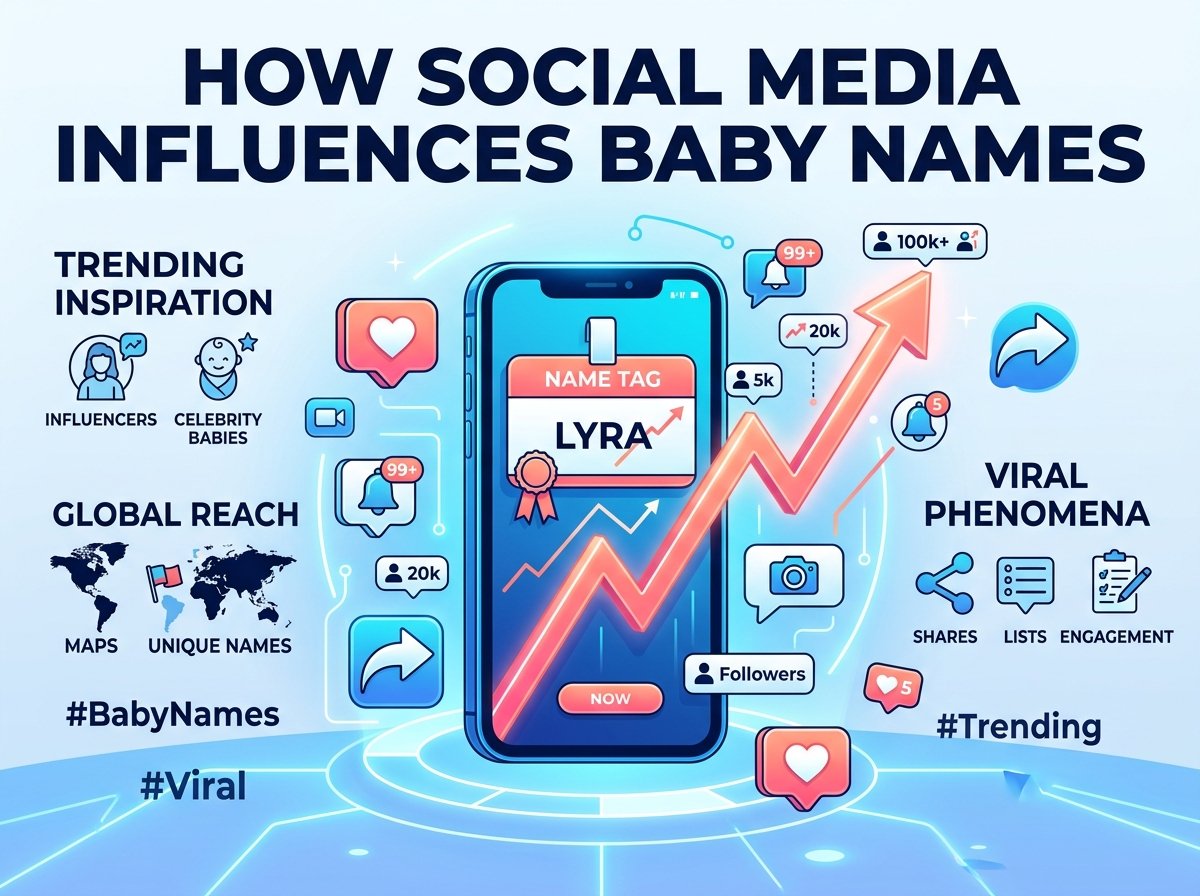
A baby born in 2019 was named “Hashtag.” Not as a nickname. On the actual birth certificate. That’s how deep social media has gotten into our naming decisions.
Think about it — your grandparents probably named their kids after family elders or religious figures. Your parents might’ve picked something from a movie or a song they loved. But today? A single TikTok video with 10 million views can make a forgotten name skyrocket to the top of baby name charts within weeks.
Social media hasn’t just changed how we shop, eat, or travel. It’s quietly reshaped one of the most personal decisions you’ll ever make — what to call your child.
If you’re expecting, planning ahead, or just curious about why some names suddenly become popular, this article breaks down exactly how platforms like Instagram, TikTok, Pinterest, and Reddit are shaping baby name trends right now. You’ll also learn how to use social media wisely without falling into naming traps you might regret later.
How Social Media Became the New Baby Name Book
Remember those thick baby name books from the 90s? The ones with 10,000 names organized alphabetically, sitting in every bookstore’s parenting aisle?
They’re practically extinct now.
A 2023 survey by BabyCenter found that 58% of millennial and Gen Z parents used social media as their primary source for baby name inspiration. That number was just 15% in 2013. The shift happened fast, and there’s no going back.
Why Did This Shift Happen?
A few reasons make perfect sense when you think about them:
- Instant access to trends: You don’t need to buy a book. Open Instagram, search #babynames, and you’ll find thousands of curated lists within seconds.
- Visual inspiration: Seeing a name paired with a cute baby photo on Pinterest or Instagram triggers an emotional reaction that a plain text list never could.
- Community feedback: Parents can post their shortlist in a Facebook group or Reddit thread and get 200 opinions overnight.
- Influencer culture: When a popular creator names their baby something unique, millions hear about it simultaneously.
The old path was linear — you’d hear a name, like it, maybe check a book, ask family. The new path is chaotic, exciting, and heavily influenced by algorithms. Your “For You” page on TikTok is actively shaping what names feel fresh, trendy, or appealing to you, often without you realizing it.
The TikTok Effect: How Viral Videos Create Name Trends
TikTok deserves its own section because no platform has influenced baby names as rapidly or dramatically.
How One Video Changes Everything
Here’s how the cycle typically works:
- A creator posts a video — maybe “names that sound like royalty” or “vintage names that deserve a comeback.”
- The video goes viral, racking up millions of views.
- Comments flood in: “OMG, adding Aurelius to my list!”
- Other creators make response videos, reaction videos, or “part 2” follow-ups.
- The name enters mainstream consciousness within days.
Real example: The name “Ophelia” was fairly uncommon in the US for decades. After multiple TikTok videos featuring it as a “dark academia aesthetic name” in 2021–2022, it jumped 34 spots on the SSA baby name rankings. That’s not a coincidence.
The “Aesthetic Name” Phenomenon
TikTok invented an entirely new way to categorize names — by aesthetic. This didn’t exist before social media.
You’ll see content organized around:
- Cottagecore names: Clover, Wren, Juniper, Hazel
- Dark academia names: Cassius, Atticus, Dorian, Isolde
- Coastal grandmother names: Margaret, Eleanor, Dorothy
- Soft girl names: Aria, Luna, Lila, Seraphina
These categories didn’t come from naming experts or linguists. They came from TikTok creators who understand visual branding. And they’re incredibly effective at making certain names feel desirable because they attach a whole lifestyle identity to a name.
Did You Know? The name “Wren” barely appeared in the SSA top 1000 before 2013. After becoming a staple in cottagecore TikTok content, it reached the top 250 by 2023. You can check how name popularity changes over time to see similar patterns.
Instagram and the “Curated Baby Name” Culture
If TikTok drives speed, Instagram drives aesthetics and aspiration.
The Influencer Ripple Effect
When a major influencer announces their baby’s name, it doesn’t just make headlines — it creates a wave. These announcements are carefully styled: a beautiful photo, a meaningful caption about the name’s origin, maybe a story highlight dedicated to the name reveal.
This isn’t random sharing. It’s branding. And it makes the name feel aspirational.
Some documented cases:
- Kylie Jenner naming her daughter Stormi in 2018 → “Stormi” saw a 60%+ increase in interest on baby name sites within weeks.
- Gigi Hadid and Zayn Malik’s daughter Khai → sparked a massive surge of interest in Arabic-origin names among non-Arab parents.
- Elon Musk’s X Æ A-12 (later changed to X Æ A-Xii) → while almost nobody copied this exact name, it normalized the idea of extremely unconventional names and generated millions of conversations about naming boundaries.
Want to see more examples? Check out celebrity names that became trending for a deeper look at how famous figures shape naming patterns.
Name Aesthetic Accounts
There are now entire Instagram accounts dedicated solely to baby name curation. Accounts like @nameberry, @babyname.inspo, and dozens of smaller niche pages post daily content — name lists organized by theme, origin, letter, or “vibe.”
These accounts have hundreds of thousands of followers. They’ve essentially replaced the baby name book industry. And their influence is measurable: names they feature frequently show up in trending data shortly after.
Pinterest: The Silent Name Influencer
People often forget about Pinterest, but it’s quietly one of the biggest drivers of baby name choices.
Here’s why: Pinterest is where planning happens. Expecting parents create boards — nursery ideas, baby clothes, registry items, and yes, baby name lists. The platform’s algorithm then feeds them more name content based on what they pin.
The Pinterest Name Bubble
This creates something I call the “Pinterest Name Bubble.” You pin one list of “unique girl names,” and suddenly your entire feed is name content. You’re exposed to the same trending names over and over. Names like Isla, Sage, Rowan, and Finn feel like they’re everywhere — because on your Pinterest feed, they literally are.
Pro Tip: If you’re using Pinterest for baby name research, deliberately search for names from different cultures, eras, and styles. Break the algorithm’s echo chamber. Otherwise, you’ll end up with the same list every other Pinterest parent has.
The difference between Pinterest trends and what’s actually rare is bigger than most parents realize. You can compare by exploring what makes a name rare or common — the results might surprise you.
Reddit and Facebook Groups: The Crowdsourcing Effect
Social media didn’t just give parents inspiration — it gave them a jury.
Naming by Committee
Reddit’s r/namenerds community has over 800,000 members. Facebook baby name groups have millions more. These spaces serve a specific purpose: parents post their name ideas and ask strangers to weigh in.
Typical posts look like this:
- “We’re choosing between Eloise and Margot — thoughts?”
- “Is the name Ezra too trendy now?”
- “My husband wants to name our son Braxley. Please talk him out of it.”
This is a completely new dynamic. Previous generations relied on family opinions, maybe close friends. Now, hundreds of strangers influence your child’s name. And those strangers have strong opinions.
The “Name Shaming” Problem
Reddit and Facebook groups have created an unintended side effect — name anxiety. Parents second-guess their choices because:
- Someone said the name sounds “too common”
- Others associated it with a negative character or person
- A commenter called it “made up” or “try-hard”
- Group consensus leaned toward a different name
This crowdsourcing can be helpful for catching genuine problems (like unfortunate initials or unintended meanings). But it can also strip away the personal significance of a name and replace it with group-approved safety.
Warning: Online opinions are just opinions. A name you love might get criticized on Reddit but be perfect for your family. Don’t let strangers override your instinct on something this personal.
Real Data: Names That Social Media Made Popular
Let’s look at specific names that owe their rise directly to social media influence:
Girl Names Boosted by Social Media
| Name | Pre-Social Media Rank | Post-Viral Rank | Primary Platform |
|---|---|---|---|
| Luna | #77 (2015) | #6 (2023) | Instagram/TikTok |
| Wren | Outside top 500 (2012) | #230 (2023) | TikTok/Pinterest |
| Isla | #150 (2014) | #33 (2023) | Pinterest/Instagram |
| Ophelia | #390 (2018) | #136 (2023) | TikTok |
| Maeve | Outside top 500 (2015) | #145 (2023) | Reddit/TikTok |
Boy Names Boosted by Social Media
| Name | Pre-Social Media Rank | Post-Viral Rank | Primary Platform |
|---|---|---|---|
| Kai | #190 (2014) | #71 (2023) | TikTok/Instagram |
| Silas | #250 (2013) | #100 (2023) | Pinterest/Reddit |
| Jasper | #260 (2015) | #96 (2023) | TikTok |
| Rowan | #290 (2014) | #107 (2023) | |
| Arlo | Outside top 300 (2014) | #157 (2023) | Instagram/TikTok |
Data sourced from SSA records and BabyCenter trend reports.
Notice a pattern? Many of these were old-fashioned names making a comeback — they weren’t invented by social media. They were rediscovered through it.
Also worth noting: the rise of gender-neutral names that are trending — names like Rowan, Sage, and Quinn — is heavily fueled by social media conversations around gender inclusivity.
The Paradox: Wanting “Unique” But Getting “Trendy”
Here’s the irony that most parents don’t see coming.
Social media makes you feel like you’ve discovered a hidden gem. You find a name on a TikTok video titled “names nobody is using” — and you think, perfect, my child will be the only one.
But that video has 3 million views. And thousands of other parents had the exact same thought.
The Juniper Problem
“Juniper” is a perfect case study. Around 2017–2019, it appeared constantly in “unique nature names your friends haven’t heard of” content across all platforms. Parents loved it because it felt fresh, earthy, and different.
By 2023, Juniper ranked #138 on the SSA list. There are now multiple Junipers in preschool classes across the country. The name went from genuinely uncommon to solidly mainstream — precisely because social media promoted it as uncommon.
This pattern repeats constantly. The names social media labels as “rare” often become the most overused baby names right now within just 2–3 years.
Pro Tip: If you truly want a rare name, don’t rely on “unique name” lists from popular accounts. Instead, check if your name is truly unique using actual data tools before committing.
Common Myths About Social Media and Baby Names
Let’s clear up some things people get wrong:
Myth 1: “Social Media Only Promotes Weird Names”
Not true. The majority of social media-influenced names are classic names that got a second life — Eleanor, Theodore, Maeve, Silas. The extreme names like “Hashtag” or “Like” get media attention, but they represent a tiny fraction.
Myth 2: “These Trends Only Affect Young Parents”
Nope. Parents of all ages use social media for name research. A 2024 Pew Research survey showed that parents aged 30–40 were actually more active in baby name Facebook groups than parents under 25.
Myth 3: “A Name That’s Trending Online Will Be #1 on the Charts”
Social media trends and SSA rankings don’t always align. A name can be wildly popular on TikTok and still not crack the top 100 nationally. Online buzz creates a spike, but geography, culture, and family traditions still filter the final choice.
Myth 4: “Social Media Killed Traditional Naming”
Traditional names are thriving — they’re just being repackaged. Instagram didn’t kill the name “Margaret.” It rebranded it as a “coastal grandmother name” and made it cool again. Social media recycles more than it creates.
How to Use Social Media for Baby Names Without Regret
If you’re actively searching for names, here’s a practical framework:
Step 1: Gather Widely, Then Filter
Use social media for initial inspiration, not final decisions. Save names from different platforms, cultures, and styles. Build a long list of 20–30 names before narrowing down.
Step 2: Check the Actual Data
Just because a name feels unique on your feed doesn’t mean it is. Look up real statistics. Resources like the SSA database or the science of name statistics can show you what’s actually happening with a name’s popularity.
Step 3: Say It Out Loud — A Lot
Social media names are visual. You see them written in beautiful fonts on aesthetic backgrounds. But your child will hear their name spoken thousands of times. Say the full name out loud. Yell it across a playground. Whisper it at bedtime. Does it still feel right?
Step 4: Wait Before Committing
If you fall in love with a name from a viral video, give it two weeks. Your emotional reaction to a trending name might fade once the algorithm stops showing you related content. If you still love it after the novelty wears off, it’s probably a genuine choice.
Step 5: Ignore the Haters (Mostly)
Post your shortlist in a group if you want feedback on pronunciation issues or cultural sensitivity. But don’t let strangers vote on your baby’s identity. A name’s meaning to you matters more than its rating in a Reddit thread.
What’s Coming Next: AI, Algorithms, and Future Name Trends
Social media’s influence on baby names isn’t slowing down. It’s accelerating — and evolving.
Algorithm-Driven Name Discovery
Platforms are getting smarter. TikTok’s algorithm already knows you’re expecting before you tell anyone (based on your search and watch patterns). It starts feeding you name content automatically. This means your “discovery” of a name might be algorithmically engineered, not organic.
AI Name Generators
Tools powered by AI are entering the naming space. You input preferences — origin, length, sound, meaning — and AI suggests combinations. These tools pull from social media trend data. Learn more about how AI and data predict future baby names to understand where this technology is headed.
The Counter-Trend
As social media naming becomes mainstream, a growing group of parents is deliberately choosing names with zero online presence. They’re picking family names, hyper-local cultural names, or genuinely obscure historical names specifically because they can’t be found on any trending list. This counter-trend is itself being discussed on social media — which is its own kind of ironic.
FAQ Section
Does social media actually change what parents name their babies?
Yes, and there’s data to back it up. BabyCenter’s annual surveys consistently show that social media is now the #1 source of baby name inspiration for new parents, overtaking family tradition and books. Names featured in viral content show measurable increases in SSA registration data within 1–2 years of going viral.
Which social media platform has the biggest influence on baby names?
TikTok currently has the strongest short-term impact because of how quickly content goes viral there. A single video can introduce a name to millions overnight. Pinterest has the biggest long-term influence because parents use it during the planning phase and revisit their boards repeatedly over months. Instagram sits somewhere in between, especially through influencer announcements and dedicated name curation accounts.
How can I find a truly unique baby name that isn’t already trending on social media?
Start by looking beyond English-language social media. Explore names from your own cultural heritage, historical records, or literature that hasn’t been adapted into a Netflix show. Use data tools to check how many people share the name you’re considering. If a name appears on any “unique names” list with over 100K views, assume it’s already on thousands of other parents’ shortlists.
Can naming my baby after a social media trend backfire?
It can, in specific ways. If a name is strongly tied to a single moment (a meme, a viral video, a specific influencer), it might feel dated quickly — the same way “Khaleesi” peaked after Game of Thrones and then cooled sharply. Names with broader cultural roots tend to age better than names tied to a single piece of content. The key is choosing a name you’d still love even if you’d never seen that particular post.
Your Child’s Name Is Bigger Than Any Algorithm
Social media has genuinely transformed how we discover, discuss, and decide on baby names. That’s not inherently good or bad — it’s just reality.
The platforms give you access to beautiful names you might never have encountered through your family or local community. They connect you with other parents navigating the same decision. They surface cultural and historical gems that deserve attention.
But they also create echo chambers, manufacture false scarcity (“rare” names that aren’t actually rare), and pressure you into overthinking one of the most instinctive decisions of parenthood.
Use social media as a starting point, not a verdict. Save the names that make your heart skip. Research them with real data. Say them to your partner at 11 PM when the house is quiet. The right name will stick — not because an algorithm pushed it to your feed, but because it felt like it already belonged to your child.
And years from now, when your kid asks, “Why did you name me this?” — you’ll want an answer that’s more meaningful than “it was trending.”