Gender Neutral Names That Are Trending

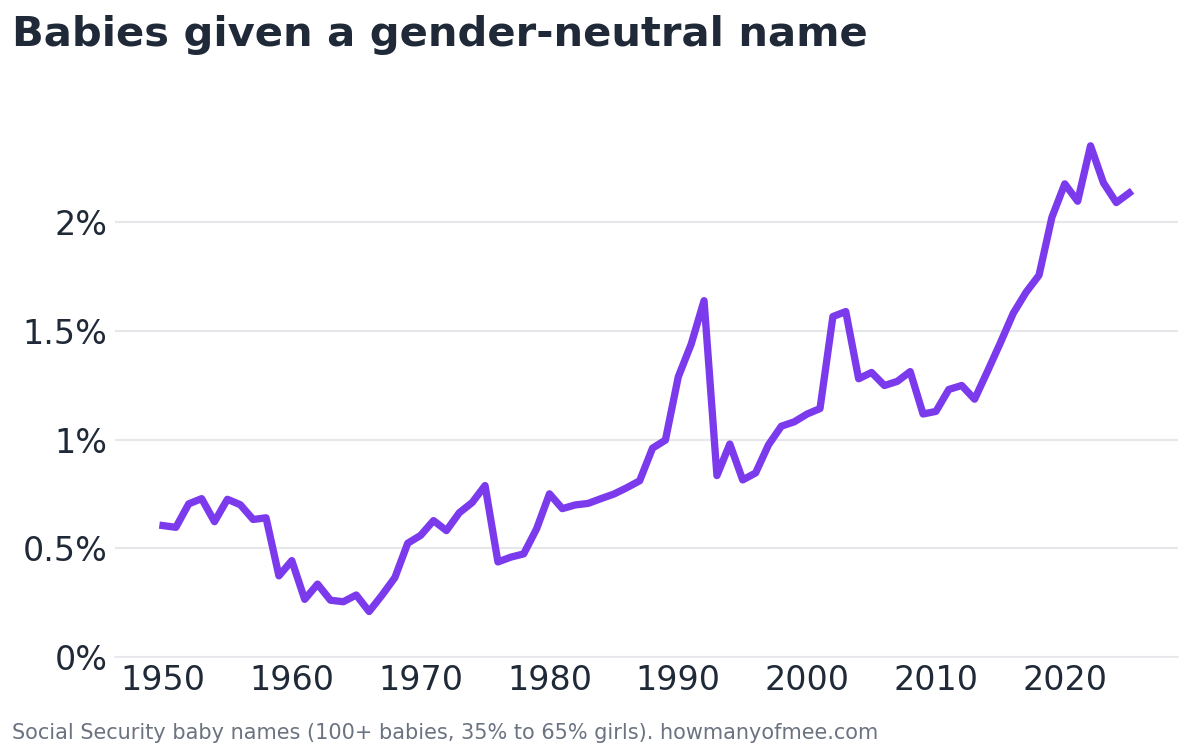
Back in 1985, roughly 1.5% of babies in the U.S. received gender neutral names. By 2024, that number jumped past 4% — and it’s still climbing. That’s not a small shift. That’s millions of parents actively choosing names that don’t announce a gender before their kid even walks into a room.

Maybe you’re expecting a baby and want a name that feels open, modern, and free from boxes. Or maybe you’re an adult looking to rename yourself something that fits who you really are. Either way, you’re here because gender neutral names are everywhere right now — on birth certificates, on social media profiles, and on the lips of celebrities naming their children.

Here’s the thing, though. Not all “unisex” name lists you find online are actually helpful. Half of them recycle the same ten names (hi there, Jordan and Taylor), while the other half suggest names that sound great on paper but nobody actually uses.

This article is different. You’ll get genuinely trending names, the stories behind them, practical tips for choosing one, and honest talk about what to expect when you pick a name that doesn’t fit traditional categories. Let’s get into it.


Why Are Gender Neutral Names So Popular Right Now?

Gender neutral names aren’t new. Names like Leslie, Ashley, and Kim have floated between genders for decades. But the current surge? That’s driven by a few specific things happening at once.

Cultural shifts are real. Conversations around gender identity have become mainstream. Parents who grew up being told “that’s a boy name” or “that’s a girl name” are now pushing back against those labels for their own kids. They want names that give their children room to define themselves.

Celebrity influence plays a role too. When Ryan Reynolds and Blake Lively named their daughter James, or when Ashton Kutcher chose Wyatt for his daughter, it sent a message: names don’t have to be gendered. You can explore how celebrity names shape baby name trends — the effect is bigger than most people realize.

Workplace dynamics matter. Some research suggests that gender-ambiguous names on resumes can reduce unconscious bias during hiring. A 2023 study from the University of Toronto found that resumes with gender neutral names received roughly 8% more callbacks in male-dominated fields. Parents are thinking about that.

Globalization blends naming cultures. As families become multicultural, they look for names that work across languages and don’t carry strict gender associations in any one culture.

Quick Fact: According to SSA (Social Security Administration) data, the number of names given to both boys and girls in roughly equal proportions has tripled since the year 2000.


The Hottest Gender Neutral Names Trending in 2025

Let’s break these down into categories so you can actually find what fits your style. These aren’t random picks — they’re based on SSA data, BabyCenter trends, and real search volume patterns.

Nature-Inspired Gender Neutral Names

Nature names have exploded in popularity, and many of them naturally lean unisex.

  • Sage — Herbal, wise, calm energy. Ranked in the top 200 for both boys and girls in 2024.
  • Rowan — Originally Irish, meaning “little red-haired one.” Used almost 50/50 across genders.
  • River — Gained mainstream traction after River Phoenix, now loved for all genders.
  • Oakley — Climbing fast on baby name charts since 2022.
  • Wren — Short, sharp, memorable. Huge jump in popularity since 2020.
  • Ash — Works as a standalone or short for Asher/Ashley.
  • Indigo — Bold, colorful, and truly gender-free.

Did you know? Wren jumped over 150 spots in SSA rankings between 2019 and 2024, making it one of the fastest-rising nature names of the decade.

Modern & Trendy Unisex Names

These are the names dominating Pinterest boards and Instagram birth announcements right now.

  • Avery — Originally a surname, now a top-50 name for girls and top-200 for boys.
  • Quinn — Irish origin, meaning “wise.” Clean, strong, and perfectly balanced.
  • Ellis — Welsh origin. Has that vintage-meets-modern feel parents are loving.
  • Remi/Remy — French roots, rising sharply since 2021.
  • Kai — Hawaiian for “sea,” Japanese for “forgiveness.” Globally appealing.
  • Finley — Scottish, meaning “fair warrior.” Used across all genders increasingly.
  • Sutton — A surname-turned-first-name that’s gaining real traction.

If you want to understand why some names suddenly explode in popularity, much of it traces back to a combination of pop culture moments and generational fatigue with older names.

Classic Names That Have Gone Gender Neutral

Some names started gendered and have shifted over time. Others have always lived in the middle.

  • Morgan — Originally male, now used widely for all genders. Still feels strong and classic.
  • Cameron — Peaked as a male name in the ’90s, now roughly 40% female usage.
  • Jordan — Made famous by Michael Jordan, but equally popular for girls since the early 2000s.
  • Taylor — Swung from majority-male to majority-female over three decades.
  • Casey — Consistent unisex use since the 1970s.
  • Dana — One of the earliest crossover names in American naming history.

The way names change gender popularity over time tells a fascinating story about culture, media influence, and generational preferences.

Short & Punchy Unisex Names

Short names have their own appeal — easy to spell, easy to pronounce, easy to remember globally.

  • Kit — Two to three generations ago, this was strictly male. Now? Completely open.
  • Ari — Hebrew for “lion.” Works beautifully for anyone.
  • Sol — Spanish for “sun.” Rising in the U.S. and Latin America simultaneously.
  • Ray/Rae — Depending on spelling, leans slightly one way, but functionally unisex.
  • Jude — Beatles fans already know this one. Growing for all genders.
  • Zev — Hebrew origin, meaning “wolf.” Still rare but climbing.

Pro Tip: Shorter names pair well with longer middle names. “Kai Alexander” or “Wren Elizabeth” — mixing lengths creates a natural rhythm that sounds great when spoken aloud.

Rising Stars: Names You’ll Hear Everywhere by 2026

These are the ones just starting to gain momentum. If you want something trending but not yet overused, look here.

  • Arden — English origin, literary feel (Forest of Arden in Shakespeare).
  • Marlowe — Soft, sophisticated, and gaining fast.
  • Lennox — Scottish, meaning “elm grove.” Has edge without being harsh.
  • Emery — Originally male, now used predominantly for girls but still genuinely unisex.
  • Bellamy — French for “beautiful friend.” Rare enough to feel special.
  • Shiloh — Hebrew for “peaceful.” Angelina Jolie’s usage boosted visibility, but it hasn’t become overused.
  • Everest — Bold, nature-inspired, and completely gender-free.

Curious whether a name you’re considering is actually rare? You can check if your chosen name is truly unique and see how many people already carry it.


How to Choose the Right Gender Neutral Name

Finding a name you love is one thing. Finding a name that works in real life is another. Here’s what experienced parents and naming experts actually recommend.

Think About Sound and Flow

Say the full name out loud. First name + middle name + last name. Does it flow? Are there awkward syllable clashes? Does it sound natural when you call it across a playground?

A good test: Say it in three contexts.

  1. Introducing themselves at a job interview: “Hi, I’m Sage Parker.”
  2. Being called by a teacher: “Rowan, can you answer question three?”
  3. Written on a diploma or award certificate.

If it works in all three, you’ve got a winner.

Consider Spelling Carefully

Some unisex names have gender-leaning spellings. “Jessie” reads female. “Jesse” reads male. “Robin” and “Robyn” carry different gender assumptions too.

If you truly want a name that gives nothing away, stick with the most common spelling or the one that’s most balanced in usage data.

Check Popularity — But Don’t Obsess Over It

A name can be trending without being overused. “Avery” is popular, sure — but there won’t be five Averys in every classroom like there were five Jessicas in 1990.

You can explore what makes a name rare or common to get perspective on where your chosen name actually falls on the spectrum.

Think Internationally

If your family is multicultural or you want a name that travels well, test how it sounds in other languages. “Kai,” for example, works in Hawaiian, Japanese, German, and Scandinavian cultures. “River” translates conceptually almost everywhere.

Some names, though, might have unintended meanings in other languages. A quick Google search can save you from embarrassment.

Ask Yourself the Hard Questions

  • Will your child have to explain or spell this name constantly?
  • Are you choosing this name for your child or for yourself?
  • Does the name carry enough weight for an adult, not just a baby?
  • How does it pair with your surname?

Common Myths About Gender Neutral Names (Debunked)

There’s a lot of misinformation floating around. Let’s clear some of it up.

Myth #1: “Gender Neutral Names Confuse Children”

No credible child psychology research supports this claim. Children develop gender identity through a complex mix of biology, social interaction, and self-understanding — not from their name. A child named Avery or Quinn won’t be confused about who they are because of what’s on their birth certificate.

Myth #2: “Unisex Names Are Just a Trend — They’ll Fade”

History says otherwise. Unisex naming has been growing steadily for over 50 years. It’s not a fad — it’s a long-term cultural shift. Names like Lindsay, Ashley, and Madison all started as male names and permanently crossed over. The movement toward truly balanced unisex names is just the latest chapter.

If you look at how name popularity changes over time, you’ll notice that once a name goes unisex, it rarely goes back to being strictly gendered.

Myth #3: “Gender Neutral Names Sound Weird or Made-Up”

Most trending gender neutral names have deep historical roots. Rowan is ancient Irish. Quinn is Celtic. Sage comes from Latin. These aren’t invented words — they’re names with centuries of meaning behind them.

Myth #4: “Schools and Workplaces Will Have Problems With These Names”

Institutions have adapted. Most forms now avoid assuming gender from a name. Medical systems, school registrations, and HR platforms have largely updated to accommodate names that don’t indicate gender.

Myth #5: “A Boy With a ‘Girl’ Name Will Get Bullied”

Research from Duke University (2019) found that name-based teasing has declined significantly among Gen Alpha children compared to previous generations. Kids today grow up with diverse name exposure through global media, diverse classrooms, and the internet. A boy named Avery in 2025 faces far less friction than a boy named Ashley did in 1995.


The Psychology Behind Choosing a Genderless Name

There’s more happening beneath the surface when parents choose gender neutral names. It goes beyond aesthetics.

Identity freedom is a big motivator. Many parents see a gender neutral name as a small gift of flexibility — giving their child a name that doesn’t carry pre-loaded expectations about who they should become.

Parental values get reflected in naming. Choosing “Sage” over “Sarah” or “Quinn” over “Quentin” often signals that parents prioritize individuality and open-mindedness. The psychology behind unique names shows that naming choices reveal a lot about family values and aspirations.

Some parents are also thinking about equity. If a name doesn’t reveal gender on a resume, an application, or a byline, the person behind it gets evaluated on merit first. It’s a practical consideration, even if it’s not the primary one.


Gender Neutral Names Across Different Cultures

Unisex naming isn’t just a Western phenomenon. It’s happening globally, and some cultures have practiced it for centuries.

Japanese names like Akira, Haru, and Sora have always been used across genders. Japanese naming conventions are more flexible about gender than most Western traditions.

Indian/Hindu names like Kiran (meaning “ray of light”), Arya, and Jaya work for all genders. You can see how popular Hindu names worldwide sometimes include these crossover names.

Arabic names tend to be more gendered, but names like Noor (meaning “light”) and Iman (meaning “faith”) are used across genders in many Muslim communities.

Scandinavian names like Siri, Kim, and Robin have long-standing unisex traditions.

African names vary enormously by region, but many Nigerian names like Amari and Adé are used for all genders.

The point? Gender neutral naming isn’t some new invention. It’s a practice that spans cultures and centuries. What’s new is the conscious, widespread embrace of it.


What the Data Actually Says: SSA Trends for 2024–2025

Let’s look at real numbers. Based on the most recent SSA data releases and BabyCenter’s 2024 survey of over 600,000 parents:

NameBoy RankGirl RankGender Split
Avery#189#1928% boy / 72% girl
Rowan#113#21862% boy / 38% girl
Quinn#316#8426% boy / 74% girl
Kai#72#43278% boy / 22% girl
Sage#363#17935% boy / 65% girl
Finley#188#14942% boy / 58% girl
River#112#18461% boy / 39% girl

Notice something? Even the most “balanced” names still lean somewhat toward one gender. Truly 50/50 names are rare. Rowan and River come closest right now. If perfect balance matters to you, those are strong picks.

Also worth noting: these splits shift over time. A name that’s 60/40 today might be 50/50 in three years. Tracking the most searched baby names on Google gives you a real-time pulse on where interest is heading.


Naming Tips from Parents Who Chose Gender Neutral Names

Real talk from real parents — here’s what people who actually chose these names say they wish they’d known.

“Prepare a one-sentence response.” You will get questions. “Is that a boy or girl name?” happens. Having a simple answer like “It works for anyone — we just loved the sound” shuts down awkward conversations fast.

“Check the initials.” One parent shared that they almost named their child Avery Simon Smith — and then realized the initials spelled A.S.S. Always check.

“Don’t overthink what strangers think.” Multiple parents said they stressed about reactions before the baby arrived, but once they saw their child, the name just fit. Nobody questioned it after that.

“Google the name thoroughly.” Is there a famous criminal, a controversial brand, or an embarrassing internet meme connected to the name? Five minutes of research can save you years of explaining.

Pro Tip: Run the name through social media searches. If someone notorious already “owns” that name online, your child might have a harder time building their own digital identity later.


Gender Neutral Names to Avoid (And Why)

Not every unisex name is a good pick. Some have issues worth knowing about.

  • Names that have fully crossed over. Ashley, Lindsay, and Meredith are technically unisex but now read almost exclusively female. A boy named Ashley in 2025 won’t feel the “gender neutral” benefit.
  • Names that are trendy but empty. If a name sounds cool but has zero meaning and no cultural root, it might feel dated very quickly.
  • Overly complex spellings. “Jaidyn” instead of “Jayden” or “Emersyn” instead of “Emerson” — creative spelling doesn’t make a name more unique, it just makes paperwork harder.

If you want to understand which names are overused right now, it’s worth checking current saturation before committing.


FAQ Section

Are gender neutral names legally accepted everywhere?

Yes, in the United States, there are no federal or state laws restricting names based on gender. You can legally name a boy “Rose” or a girl “James.” Some countries (like Germany, Iceland, and Denmark) do have gendered naming laws, so if you’re naming a child internationally, check local regulations.

Do gender neutral names affect a child’s sense of identity?

Research from the American Psychological Association shows no negative impact on identity development from gender neutral names. Children form their gender identity through social experiences, family dynamics, and self-perception — not through their name alone. Many adults with unisex names report feeling that their name gave them a sense of freedom and flexibility.

What’s the most popular gender neutral name in 2025?

Based on combined SSA data for both genders, Avery holds the top spot when you look at total usage across all genders. If you measure by the most balanced gender split, Rowan and Finley are the closest to true 50/50 usage. Popularity varies by state — how name trends spread across states shows interesting regional differences.

Can a gender neutral name hurt my child’s career?

Evidence actually points the other direction. A 2023 study published in the Journal of Applied Psychology found that gender-ambiguous names on resumes reduced gender-based screening bias by approximately 8–12% across multiple industries. Your child’s name won’t hold them back — and might quietly help them get a fairer shot.

How do I know if a name is truly gender neutral vs. just occasionally used for another gender?

Check the SSA database. If a name is used for both genders at a ratio of at least 25/75 or closer, it qualifies as genuinely unisex. Anything below that (like “James” for girls, which is under 2% female usage) is technically crossover but not truly gender neutral in practice.


Your Name, Your Choice

Picking a name is one of the first big decisions you make for another human being. It’s a word they’ll hear thousands of times. It’ll be typed on applications, whispered in love, and shouted across parks. It matters.

Gender neutral names aren’t about making a political statement. They’re about giving someone a name that fits who they are — not who the world assumes they should be based on a label.

Whether you go with something rising like Marlowe or something established like Quinn, the best name is the one that makes you smile when you say it out loud. Trust that instinct.

And if you’re curious just how many people already share the name you’re considering, you can always find out how many people have your name. It might surprise you — or it might confirm you’ve found something truly special.

Leave a Comment